A Sorta Radio Free Geneva from the New Rig
A Test DL of the New Rig
In Memory of Pastor Dennis, Open Lines
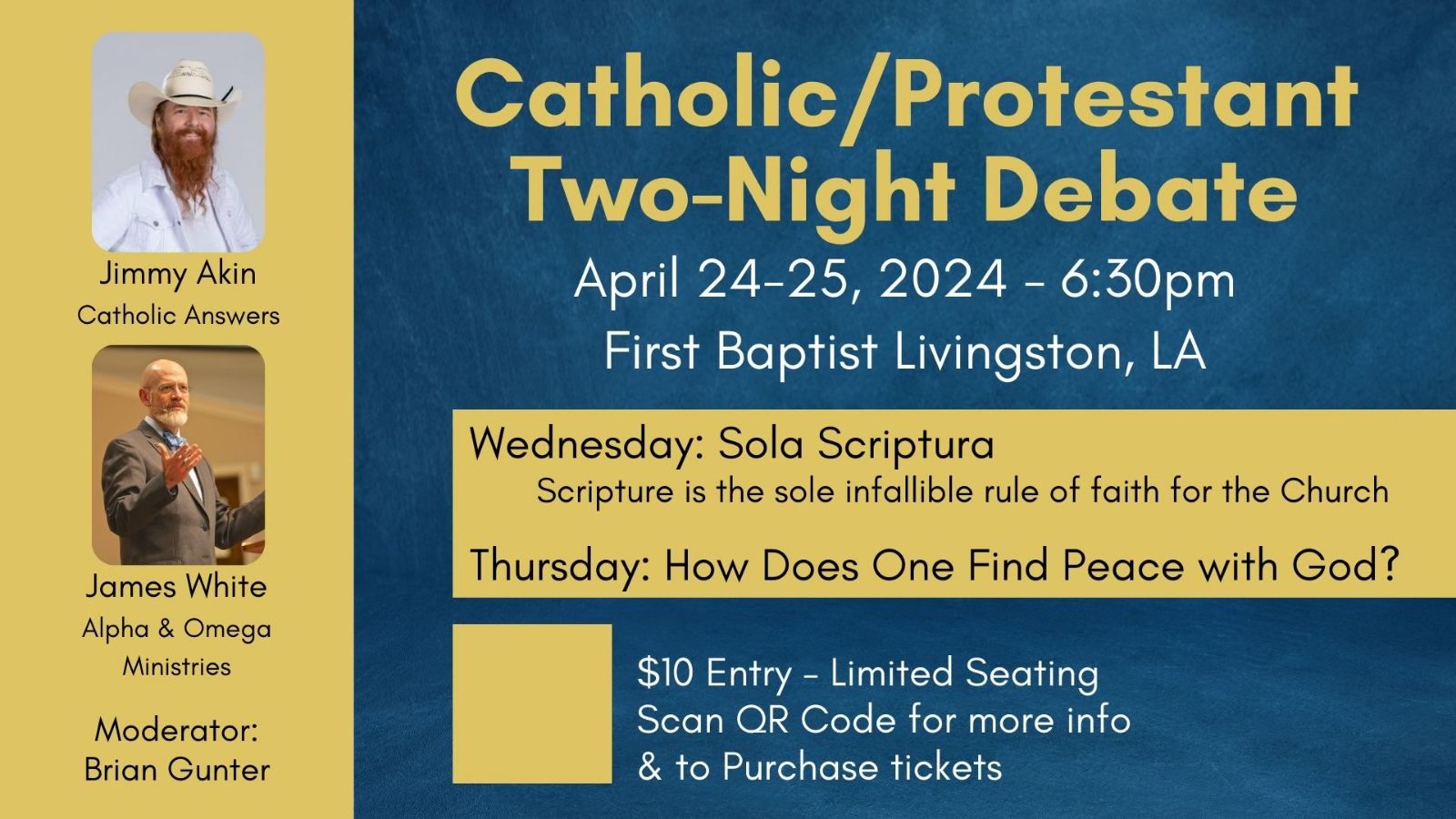
Jimmy Akin Debates Upcoming, then Open Phones
The Descent of Christ and Confessional Subscription
This Age is Passing Away: the Emptiness of Secularism, then Hebrews 10 for Resurrection Weekend
Christ is King, Yes, Yes He is!
Peter Schild and Tobias Riemenschneider from Frankfurt, Germany, on the Dividing Line
RV News, Then Hebrews 1:10-12 and Dale Tuggy
Provisionist Mythology Refuted with Full Documentation
Speaking Events
April 2024 | ||||||
|---|---|---|---|---|---|---|
| Sun | Mon | Tue | Wed | Thu | Fri | Sat |
1
|
2
|
3
|
4
|
5
|
6
| |
7
|
8
|
9
|
10
|
11
|
12
|
13
|
14
|
15
|
16
|
17
|
18
|
19
|
20
|
21
|
22
|
23
|
24
|
25
|
26
|
27
|
28
|
29
|
30
| ||||
1946: The Movie
A Believing Response to Matthew Vines’ 40 Questions
Matthew Vines has posted a series of forty questions, found here. I have written up a fairly brief response. I hope it is helpful. Do you accept that sexual orientation is not a choice? The very question simplifies the topic to a ridiculous level, Matthew. The desires a human...
David Gushee Reviewed and Refuted
James has asked me to compile the complete response to David Gushee’s ‘Reformation Project’ speech. Here you will find the three episodes in order compiling a full five hours of response. Here are the YouTube versions of the same programs:
“Gay Christianity” Refuted!
The complete response to Matthew Vines is now available as a single program. Yes its five hours and nine minutes long, but the world needs to hear this message. Share it with your friends and relatives. We’ve titled it “Gay Christianity” Refuted.
Eichenwald and Newsweek Refuted: Part 2
Today we spent another 90 minutes responding to Kurt Eichenwald’s Newsweek hit-piece on the Bible. I informed Mr. Eichenwald of the program and opened the phone lines for him to respond, but he chose not to. Please share these programs with those who have encountered the Newsweek article! Here...
“Gay Christianity” Debated
Originally posted 5/22/2013 James White and Justin Lee dialogue on the question, “Can you be a Christian homosexual” in Helena, Montana at the 2013 Reformation Montana conference. Though a debate in format, this was more of a dialogue, as Justin Lee dislikes the term “debate” and would not engage...
Ecclesiology, Response to Matthew Vines, And Almost a Third Topic…But Not Quite
Flirted with going full Jumbo edition today but pulled the plug because even I could not handle transitioning from a full response to a new (short) Matthew Vines video (with a rather, uh, interesting lesbian interlocutor) to a discussion of the textual transmission of the Qur’an. Just couldn’t pull...
Ahmed Deedat
Refuting the Shallow Arguments of Zakir Naik
As most of you know, Zakir Naik is a wildly popular Islamic speaker in the mode of Ahmed Deedat. Unfortunately, Naik knows better than to debate those who can demonstrate his errors. Which is why he remains so popular, it seems! But he cannot hide his many falsehoods. David...
Zakir Naik Illustrates the Dual Face of Islam When in the Public Square
Very interesting contrast from Zakir Naik’s own mouth (again illustrating why Naik refuses to debate those who could expose his arguments).
Zakir Naik’s Claims on Muhammad in the Bible
Here is my third and final response to Zakir Naik’s appearance on The Deen Show. What I did was take my opening statement from my debate with Shabir Ally on this topic from London in November of last year, along with my comments on Deuteronomy 18:18 from the preceding...
Shabir Ally
Debate: Tawhid or Trinity: Is God One or Three Divine Persons? with Shabir Ally at Georgia Tech, Atlanta, Georgia 11/13/2019
On November 13, 2019, James White debated Shabir Ally at Georgia Tech in Atlanta, GA on the topic Tawhid or Trinity: Is God One or Three Divine Persons?
Response to Dr. Shabir Ally, Part IV (Conclusion)
I hurry to finish my response to the article published by Dr. Shabir Ally shortly after our debate at the University of Pretoria in South Africa in early October. This is the fourth, and thankfully, final portion of my response. Dr. Ally continued: James was clearly in a bind....
Debate: Did the Earliest Followers of Jesus Believe in His Deity? Shabir Ally at University of Pretoria, South Africa 10/8/2013
Islam
Rutgers’ Racist Professor, More Muhammed Hijab, and the Neo-Socinian Nonsense Again
Back in Phoenix in our regular studio, so we looked briefly at the racist Rutgers professor and “white folks,” then we spent about twenty minutes responding to more of Muhammed Hijab’s opening statement against the Trinity, and then listened to a few minutes of the “Coffee House Sessions” webcast...
Eschatological Madness about Israel, Further Review of Muhammed Hijab
Caught up on a few items on a special DL today. Read through a long message from Twitter that is a good warning about how some eschatologies can become downright dangerous, and then moved back to reviewing aspects of Muhammed Hijab’s opening remarks in the Trinity/Tawhid debate.
Jeff Durbin on Ohio and Equal Protection, Muhammad Hijab’s Opening Presentation
Jumbo edition of the program, basically two 45 minute segments. The first featured Jeff Durbin from his rental car in parts unknown talking with us about his work with End Abortion Now, the Ohio situation, the ERLC, and he and his wife adopting two premie baby girls. In the...
King James Onlyism
Road Trip Dividing Line: Eric Holmberg’s Conversion Syndrome, Joel Beeke on the KJV
After a little updating on the current trip we looked at an article from Eric Holmberg (I think it was from Facebook) and then looked over Joel Beeke’s 12 reasons to use the KJV.
Jumbo Dividing Line: Biblicism is the Road to Rome (Steve Meister)? Then Semantic Domains and Much More
Ninety minutes in the big studio today using the big board to look at some important topics. Started off with a little KJV Only silliness, then a little TR-Only silliness, and then on to comments made by IRBC pastor Steve Meister on Josh Sommer’s program about biblicism being the...
Apologizing for the Bible, Textual Critical Issues and the TR
Back in the regular studio today. Started off with a personal response to Andy Stanley on his apologizing for Christians seeking to apply “Christian rules” to non-Christians, and then looked a bit at Reuben Swanson’s books on the text of the NT (in reference to Thomas Ross’ use thereof),...
Bible Transmission
Confucianism, Islam, and Christianity – One Point of Contrast
Qin Shi Huang (260 – 210 BC) is the most prominent of the Chinese emperors. He united China through conquest, began the Great Wall of China, and had the Terra Cotta warriors built. He’s significant to Confucianism – and especially the textual transmission of Confucius’ works – because toward...
Atheism
A Twitter Theology Dividing Line
Wrapping up our home stand before I head out next week with a pretty high energy program running through topics brought up on social media. We looked at how Francis is going to update his 2015 encyclical on the environment soon and asked, “If he can’t see the scam...
Helping Joe Rogan Know the Truth
Some folks were kind enough to link me to examples of Joe Rogan repeat common mythology about how the Bible was collected, the canon, Constantine, etc., so I took the time today to deal with those issues, as well as respond to a number of claims made in one...
Views on Homosexuality, Interaction with Lindsay on Gnosticism
Started off with Pope Francis’ comments on homosexuality and the distinction of sin/crime, then looked at a progressivist on Twitter and his explanation of how he became “affirming.” Looked at a thread documenting comments Andy Stanley made to a group of pastors in 2019, and then finished up with...
The Alpha & Omega Ministries App is now available to download.


The Dividing Line
A Sorta Radio Free Geneva from the New Rig
I really had not expected to get into this as deeply as we did, and this should have been a Radio Free Geneva, but be that as it may…we looked at the new film against “Once Saved, Always Saved,” listened to the opening section, talked about the necessary background...
A Test DL of the New Rig
Well, I suppose the nice thing is the problem we had was net related, not related to our new set up. The equipment we have installed and set up in the new RV worked fine, but the net kept dropping out on us. I will have to set up...
In Memory of Pastor Dennis, Open Lines
Started off giving thanks for the life of Pastor Dennis Pillay in Durban, South Africa, a dear brother who passed into glory last week. Then we went to Zoom calls and covered topics such as the Descent of Christ, Catholic Answers, Christian YouTubers, the Lord’s Supper, philosophy and extra...
Jimmy Akin Debates Upcoming, then Open Phones
Spent a few minutes at the start predicting where the debates in a few weeks will go in Louisiana, then we started taking calls mainly on the topic of the five debates we did last month, hence discussions on the unitarianism debate, then moving on to the Flowers and...
The Descent of Christ and Confessional Subscription
In 2022, Dr. Sam Renihan wrote “Crux, Mors, Inferi: A Primer and Reader on the Descent of Christ”. This is a helpful guide through the Biblical Data regarding Christ’s Descent as well as a look at the history of the doctrine as taught in the early church by the...
This Age is Passing Away: the Emptiness of Secularism, then Hebrews 10 for Resurrection Weekend
Two primary topics on the program today, first, the emptiness of secularism and our need to be continually aware of its influence upon our thinking, acting, and speaking. Then, Hebrews 10 and its testimony to the purpose of God in the sacrifice of Christ, a particularly relevant topic on...
Christ is King, Yes, Yes He is!
After a quick update on our travel issues/situation, we started to comment on the “Christ is King” controversy, digging down a bit into the theology and context of the statement and what it means. We also looked at some folks claiming “replacement theology” (it’s fulfillment theology, but they don’t...
Peter Schild and Tobias Riemenschneider from Frankfurt, Germany, on the Dividing Line
I was joined by two dear brothers, Reformed pastors in Frankfurt, Germany, Peter Schild and Tobias Riemenschneider, to talk about their work in Germany and about global Christianity. A most enjoyable conversation!
RV News, Then Hebrews 1:10-12 and Dale Tuggy
Went over what has been going on over the past few days about our RV—and that fact that we needed to make arrangements to obtain a different one, due to it being defective and needing to be rebuilt. Went through the whole story, mainly for our supporters, as we...
Provisionist Mythology Refuted with Full Documentation
Spent two hours documenting the incredible mythology generated by Leighton Flowers and his guests regarding my supposed “Greek errors” over the past ten days. Everyone who has heard the stories should watch, take notes, and verify for yourselves. Truly, the end of the story, and time to move on....
John Owen’s Usage of Thomas Aquinas, Part 5
Owen uses Aquinas for a definition as well as offering both disagreements and acceptance of some things.
The Marathon Ends: Final Road Trip DL (for Six Weeks Anyway)
Managed to pull off a solid internet connection from a slight wide spot in the road called Lordsburg, New Mexico (really sad little town…lots of abandoned buildings). We covered a wide variety of things, including announcing the upcoming debates, April 24th and 25th, in Lafayette, Louisiana, with Catholic Answers...
Road Trip DL: Stream Died in the Wilderness; Tuggy and Flowers Comments, More John 6.
We had a great group listening at the start but the stream died a thousand deaths tonight, so we had to just record the rest of the program. Discussed a few things from the Tuggy debate, and then moved on to more of the response from the Flowers debate....
Road Trip: Debate, Is Jesus Yahweh? Dr. Dale Tuggy, First Lutheran Church, Houston, Texas, 3/9/24
Post Debate Road Trip Dividing Line: Flowers Debate Review
Today we went back over the key issues in the Flowers debate on John 6, looked more closely at 6:45, documented errors on LF’s part, etc. Also thanked a bunch of folks for their support and a super cool gift I was given last evening (the A&O Bow Tie!)....
Road Trip: Debate, Does John 6:44 Teach Unconditional Election? Leighton Flowers, First Lutheran Church, Houston, Texas, 3/7/24
John Owen’s Usage of Thomas Aquinas, Part 4
This is a follow up to Part 1, Part 2, and Part 3 in this blog series where I will go through the works of John Owen detailing where he has mentioned Thomas Aquinas. I hope that this series is helpful. In this fourth part, I would like to...
Road Trip DL: About Asking Your Debate Opponent to Actually Interpret a Bible Verse
We took the time today to go back over the controversy that has developed when I asked my debate opponent Saturday afternoon to tell us what one of the key texts on the atonement (and in my opening statement) actually means, and he refused to do so. I played...
Purgatory Debate – 2/17/2024
In February of 2024 James White and Trent Horn did two, back to back debates at First Lutheran Church in Houston. The first night was on sola scriptura, and the second on purgatory. It was the conjunction of these two debates that was most informative and useful. We invite...
Road Trip: Debate, Why Calvinism? Conference, The Reformed Doctrine of Atonement is Biblical and Important, Jason Breda, South Jackson Civic Center, Tullahoma, Tennessee, 2/24/24
Road Trip: Why Calvinism? Conference, South Jackson Civic Center, Q & A Panel, Tullahoma, Tennessee, 2/22/24
Road Trip Morning Dividing Line
Just had to make note of the monumental Alabama Supreme Court decision and the issue of “By What Standard” that simply cannot be avoided. Then we looked at some further issues I had forgotten to get to on the last program about claims Trent Horn made and how all...
Road Trip: Why Calvinism? Conference, The Calvinism of Paul, South Jackson Civic Center, Tullahoma, Tennessee, 2/21/24
John Owen’s Usage of Thomas Aquinas, Part 3
This is a follow up to Part 1 and Part 2 in this blog series where I will go through the works of John Owen detailing where he has mentioned Thomas Aquinas. I hope that this series is helpful. In this third part, I would like to look at...
Road Trip: Debate, Is the Doctrine of Purgatory True? Trent Horn, First Lutheran Church, Houston, Texas, 2/17/24
Live Feed Link to White/Horn Purgatory Debate
Calvinist James White and Roman Catholic Trent Horn will debate the doctrine of Purgatory. At the start of the Reformation, the question of Purgatory was front and center. After all, it was an indulgence that helped one escape Purgatory to which Martin Luther objected in the 95 Theses. Protestants...
Road Trip: Debate, Is the Doctrine of Sola Scriptura True? Trent Horn, First Lutheran Church, Houston, Texas, 2/16/24
Live Feed Link to White/Horn Sola Scriptura Debate
Calvinist James White and Roman Catholic Trent Horn will debate the “formal principle” of the Reformation, sola scriptura, or Scripture Alone. From Luther on, Protestants have argued that the Bible is the only “God-breathed” revelation that can provide sufficient knowledge of God and His salvation. Roman Catholics argue that...
Pre-Debate Road Trip Dividing Line from Houston
Talked a little about the “He Gets Us” thing, gave a brief report on the Allie Beth Stuckey Show from Tuesday, then dove into the Protevangelium of James and read its narrative of the birth of Christ in light of the defense of this document as containing genuine Christian...
Road Trip DL: Francis, Cernovich, then Back to Carl Trueman and Development of Doctrinal Expression
Back to on-the-road status for the program today! We covered what’s going on tomorrow and in the upcoming days, then looked at a tweet from @Cernovich wherein he demonstrates he has never done serious reading in the topic, and then finished up the hour looking at a key section...
John Owen’s Usage of Thomas Aquinas, Part 2
This is a follow up to Part 1 in this blog series where I will go through the works of John Owen detailing where he has mentioned Thomas Aquinas. I hope that this series is helpful. In this second part, I would like to look at a couple of...
John Owen’s Usage of Thomas Aquinas, Part 1
Recently, Carl Trueman has stated the following: “I had a breakthrough on John Owen when I realized how often he cited Thomas Aquinas in his marginal notes in his texts. Struck me as odd.” With this in mind, I would like to begin looking through just how extensive this...
Last DL in Phoenix Before Trip: Roman Catholic Arguments
Head out on Friday (I keep saying Lord willing, and I mean that), so hopefully our next edition will be on the road, possibly on Monday. Played segments from a video from the pastor of “Zootown Church” in Missoula, Scott Klaudt where he repeated a whole string of utterly...
Provisionist Palaver, Trent Horn on Argumentation, A Few Moments with Carl Trueman and Doctrinal Development
My apologies for all the coughs and sniffs, I actually feel pretty good, but the voice and sinuses—not so much. Spent time talking about God’s decree over against Provisionist palaver (look it up), then looked at some Trent Horn material in preparation for a few weeks from now, and...
A Little Bit on Infants, a Little Bit on Alistair, the Rest with More Carl Trueman
Covered a number of topics today with a short discussion of how a small number of ne’er-do-wells can create faux controversies for not positive reason, then talked a bit about Alistair Begg’s “swing and a miss” response, and then got back to Carl Trueman’s speech on classical theology. An...
Listen on the Go
Theology Matters
On the “Socinian Method”
Well, I guess there has been some progress. At least now I know that yes, brother Briggs was making reference to me, hence, I am a dangerous man to be warned about globally, evidently. I doubt I will get much in the way of serious response about the allegation...
On the Decree and the Actions of God’s Elect
You can tell when certain folks have just completely run out of meaningful commentary and argumentation, or, never possessed any to begin with. When people argue that someone who accepts the biblical teaching of God’s sovereign decree, election, the perfection of the atonement, etc., should, as a result, not...
About that 70 Million Number on Twitter
Well, I should probably just get on my bike and let this whole thing blow over, but, I really can’t. There are some important points that, as is normally the case, are being lost in the fog of battle. Maybe someday someone will go, “Hey, there were some folks...
The Gospel At War Conference Schedule
The More Things Change…
the more they stay the same. That’s the old adage. And in a sense, it is quite true. Recently the topic of Roman Catholicism has been front and center on Twitter. Taylor Marshall, a convert to Roman Catholicism (of some sort, anyway, though surely not the same sort as...
In the Name of the most Holy and undivided Trinity
The Paris Treaty of 1783, which brought an official end to the Revolutionary War and acknowledged the existence of the United States of America, began in this thoroughly secular, Darwinian, non-binary, marry whoever you want at any age you want, way: In the Name of the most Holy and...
An Empty Name
Over the centuries many interpretations have been offered for the letters to the churches in Revelation 2 and 3. Outside of the basic understanding that these letters represent the state of these local churches in the first century, others have viewed them as representing ages of the church down...
Abiding Beauty
Last evening I spent a few hours talking with a former Christian, now a “skeptic.” Andrew Rappaport had me join him for the discussion, which I thought was going to be more on the history of the NT, manuscripts, etc., but turned out to be a more general “there’s...
A Quick Note on Categories and Endorsements
A new book has dropped by a convert to Roman Catholicism, R.R. Reno, The End of Interpretation: Reclaiming the Priority of Ecclesial Exegesis. Anyone can immediately see the relevance to the current downgrade amongst Reformed Baptists and the Reformed community more broadly with reference to sola scriptura and scriptural...
Just Too Long for a Twitter Thread!
Evidently it does not matter how plainly I speak, or write. There are those who simply refuse to hear, or read. I truly know how Doug Wilson must feel…daily. Let’s try this again. The issue is the exegesis of a particular text of Scripture that is very difficult. Do...
Witnessing Resources
The Mormon Law of Eternal Progression
I spoke on the topic of the “eternal law of progression” in Mormonism in Anchorage this morning. Here is the video.
The 1914 Chronology of Jehovah’s Witnesses
A. Establishing an Ancient Date 1. Fixed Dates 2. King List 3. Cuneiform Tablets 4. Correlation B. Astronomical Data 1. VAT 4956 – astronomical observations made during Nebuchadnezzar’ s 37th regnal year – 568/67 B. C. Hence, his first regnal year was spring 604 B. C., or, using Babylonian...
A Test for the Aaronic Priest
Are you an Aaronic priest? Possibly you are a Latter- day Saint who believes the priesthood was restored by Joseph Smith in 1829 and that you have been ordained as an Aaronic priest. Possibly you believe that Hebrews 5:4 applies to you: “And no man taketh this honor unto...
Latest Debates
Does God Forgive the Unrepentant? – The Dubious Textual Variant, ‘Father, forgive them, for they do not know what they are doing’
A few years back I posted an article explaining the weak textual evidence of Luke 23:34a, “Father, forgive them, for they do not know what they are doing.” This week is Good Friday and many sermons will be using this verse, so I think it is appropriate to bring...
Confucianism, Islam, and Christianity – One Point of Contrast
Qin Shi Huang (260 – 210 BC) is the most prominent of the Chinese emperors. He united China through conquest, began the Great Wall of China, and had the Terra Cotta warriors built. He’s significant to Confucianism – and especially the textual transmission of Confucius’ works – because toward...
Chris Pinto vs. James White – Debate Summarized
The Chris Pinto vs. James White debate on whether Codex Sinaiticus is a modern forgery can be boiled down to a few considerations. 1) Constantine Simonides claimed that he wrote the document based on collating pre-existing manuscripts, and that his uncle corrected the document. Both sides agree that he...
Sola Scriptura
Road Trip: Sola Scriptura – Session 5, Covenant of Grace Reformed Church, St Charles, Missouri, 12/3/23
Road Trip: Sola Scriptura – Session 4 of 4, Covenant of Grace Reformed Church, St Charles, Missouri, 12/2/23
Road Trip: Sola Scriptura – Session 3 of 4, Covenant of Grace Reformed Church, St Charles, Missouri, 12/2/23
Christian Worldview
A Test DL of the New Rig
Well, I suppose the nice thing is the problem we had was net related, not related to our new set up. The equipment we have installed and set up in the new RV worked fine, but the net kept dropping out on us. I will have to set up...
This Age is Passing Away: the Emptiness of Secularism, then Hebrews 10 for Resurrection Weekend
Two primary topics on the program today, first, the emptiness of secularism and our need to be continually aware of its influence upon our thinking, acting, and speaking. Then, Hebrews 10 and its testimony to the purpose of God in the sacrifice of Christ, a particularly relevant topic on...
Peter Schild and Tobias Riemenschneider from Frankfurt, Germany, on the Dividing Line
I was joined by two dear brothers, Reformed pastors in Frankfurt, Germany, Peter Schild and Tobias Riemenschneider, to talk about their work in Germany and about global Christianity. A most enjoyable conversation!
Roman Catholicism
Purgatory: 1 Corinthians 3 and Tim Staples
Don’t hold your breath for the invitation for me to be on Catholic Answers Live to discuss, oh, “Does John 6 Teach the Roman Catholic Doctrine of the Eucharist,” (I’d do it in a heartbeat), but today we had Tim Staples on the program for 90 minutes to debate...
Art Sippo on 1 Corinthians 3 and Purgatory
I noted today another fascinating post from Art Sippo, the Catholic lay apologist (and writer of odd pulp fiction stories). Algo had posted a few quotes that demonstrate, as all rational historians recognize, that dogmas like purgatory developed over time, and hence, are not apostolic in origin. Sippo’s response...
1993 Sola Scriptura Debate Review Begins
We began listening to the 1993 San Diego debate on sola scriptura with Roman Catholic apologist Patrick Madrid today. We will continue this review over the course of the next few programs, with the exception of this Thursday when we will be examining the textual variant at Luke 23:34...
The Papacy
Open Phones Dividing Line Friday
Let’s see what some of the topics were: Sam Gipp and “Antioch manuscripts,” the Church & Culture, Debating the Papacy, Justification and Roman Catholic apologists, how to talk to Christians who have bought into social justice theories, and more!
Called to Cyprian – Responding to Anders’ Historical Error
On Catholic Answers, episode #6796, Dr. David Anders makes it sound as though the issue of supremacy of the Roman bishop came up for the first time in the third century, as though “Pope Stephen” asserted the primacy of the Roman see, and as though the East acquiesced in...
The Alpha & Omega Ministries App is now available to download.
Events
April 2024 | ||||||
|---|---|---|---|---|---|---|
| Sun | Mon | Tue | Wed | Thu | Fri | Sat |
1
|
2
|
3
|
4
|
5
|
6
| |
7
|
8
|
9
|
10
|
11
|
12
|
13
|
14
|
15
|
16
|
17
|
18
|
19
|
20
|
21
|
22
|
23
|
24
|
25
|
26
|
27
|
28
|
29
|
30
| ||||
The Dividing Line
A Sorta Radio Free Geneva from the New Rig
I really had not expected to get into this as deeply as we did, and this should have been a Radio Free Geneva, but be that as it may…we looked at the new film against “Once Saved, Always Saved,” listened to the opening section, talked about the necessary background...
A Test DL of the New Rig
Well, I suppose the nice thing is the problem we had was net related, not related to our new set up. The equipment we have installed and set up in the new RV worked fine, but the net kept dropping out on us. I will have to set up...
In Memory of Pastor Dennis, Open Lines
Started off giving thanks for the life of Pastor Dennis Pillay in Durban, South Africa, a dear brother who passed into glory last week. Then we went to Zoom calls and covered topics such as the Descent of Christ, Catholic Answers, Christian YouTubers, the Lord’s Supper, philosophy and extra...
Jimmy Akin Debates Upcoming, then Open Phones
Spent a few minutes at the start predicting where the debates in a few weeks will go in Louisiana, then we started taking calls mainly on the topic of the five debates we did last month, hence discussions on the unitarianism debate, then moving on to the Flowers and...
The Descent of Christ and Confessional Subscription
In 2022, Dr. Sam Renihan wrote “Crux, Mors, Inferi: A Primer and Reader on the Descent of Christ”. This is a helpful guide through the Biblical Data regarding Christ’s Descent as well as a look at the history of the doctrine as taught in the early church by the...
This Age is Passing Away: the Emptiness of Secularism, then Hebrews 10 for Resurrection Weekend
Two primary topics on the program today, first, the emptiness of secularism and our need to be continually aware of its influence upon our thinking, acting, and speaking. Then, Hebrews 10 and its testimony to the purpose of God in the sacrifice of Christ, a particularly relevant topic on...
Theology Matters
On the “Socinian Method”
Well, I guess there has been some progress. At least now I know that yes, brother Briggs was making reference to me, hence, I am a dangerous man to be warned about globally, evidently. I doubt I will get much in the way of serious response about the allegation...
On the Decree and the Actions of God’s Elect
You can tell when certain folks have just completely run out of meaningful commentary and argumentation, or, never possessed any to begin with. When people argue that someone who accepts the biblical teaching of God’s sovereign decree, election, the perfection of the atonement, etc., should, as a result, not...
About that 70 Million Number on Twitter
Well, I should probably just get on my bike and let this whole thing blow over, but, I really can’t. There are some important points that, as is normally the case, are being lost in the fog of battle. Maybe someday someone will go, “Hey, there were some folks...
The Gospel At War Conference Schedule
The More Things Change…
the more they stay the same. That’s the old adage. And in a sense, it is quite true. Recently the topic of Roman Catholicism has been front and center on Twitter. Taylor Marshall, a convert to Roman Catholicism (of some sort, anyway, though surely not the same sort as...
In the Name of the most Holy and undivided Trinity
The Paris Treaty of 1783, which brought an official end to the Revolutionary War and acknowledged the existence of the United States of America, began in this thoroughly secular, Darwinian, non-binary, marry whoever you want at any age you want, way: In the Name of the most Holy and...
An Empty Name
Over the centuries many interpretations have been offered for the letters to the churches in Revelation 2 and 3. Outside of the basic understanding that these letters represent the state of these local churches in the first century, others have viewed them as representing ages of the church down...
Abiding Beauty
Last evening I spent a few hours talking with a former Christian, now a “skeptic.” Andrew Rappaport had me join him for the discussion, which I thought was going to be more on the history of the NT, manuscripts, etc., but turned out to be a more general “there’s...
A Quick Note on Categories and Endorsements
A new book has dropped by a convert to Roman Catholicism, R.R. Reno, The End of Interpretation: Reclaiming the Priority of Ecclesial Exegesis. Anyone can immediately see the relevance to the current downgrade amongst Reformed Baptists and the Reformed community more broadly with reference to sola scriptura and scriptural...
Just Too Long for a Twitter Thread!
Evidently it does not matter how plainly I speak, or write. There are those who simply refuse to hear, or read. I truly know how Doug Wilson must feel…daily. Let’s try this again. The issue is the exegesis of a particular text of Scripture that is very difficult. Do...
Witnessing Resources
The Mormon Law of Eternal Progression
I spoke on the topic of the “eternal law of progression” in Mormonism in Anchorage this morning. Here is the video.
The 1914 Chronology of Jehovah’s Witnesses
A. Establishing an Ancient Date 1. Fixed Dates 2. King List 3. Cuneiform Tablets 4. Correlation B. Astronomical Data 1. VAT 4956 – astronomical observations made during Nebuchadnezzar’ s 37th regnal year – 568/67 B. C. Hence, his first regnal year was spring 604 B. C., or, using Babylonian...
A Test for the Aaronic Priest
Are you an Aaronic priest? Possibly you are a Latter- day Saint who believes the priesthood was restored by Joseph Smith in 1829 and that you have been ordained as an Aaronic priest. Possibly you believe that Hebrews 5:4 applies to you: “And no man taketh this honor unto...
Latest Debates
Does God Forgive the Unrepentant? – The Dubious Textual Variant, ‘Father, forgive them, for they do not know what they are doing’
A few years back I posted an article explaining the weak textual evidence of Luke 23:34a, “Father, forgive them, for they do not know what they are doing.” This week is Good Friday and many sermons will be using this verse, so I think it is appropriate to bring...
Confucianism, Islam, and Christianity – One Point of Contrast
Qin Shi Huang (260 – 210 BC) is the most prominent of the Chinese emperors. He united China through conquest, began the Great Wall of China, and had the Terra Cotta warriors built. He’s significant to Confucianism – and especially the textual transmission of Confucius’ works – because toward...
Chris Pinto vs. James White – Debate Summarized
The Chris Pinto vs. James White debate on whether Codex Sinaiticus is a modern forgery can be boiled down to a few considerations. 1) Constantine Simonides claimed that he wrote the document based on collating pre-existing manuscripts, and that his uncle corrected the document. Both sides agree that he...
Sola Scriptura
Road Trip: Sola Scriptura – Session 5, Covenant of Grace Reformed Church, St Charles, Missouri, 12/3/23
Road Trip: Sola Scriptura – Session 4 of 4, Covenant of Grace Reformed Church, St Charles, Missouri, 12/2/23
Road Trip: Sola Scriptura – Session 3 of 4, Covenant of Grace Reformed Church, St Charles, Missouri, 12/2/23
Christian Worldview
A Test DL of the New Rig
Well, I suppose the nice thing is the problem we had was net related, not related to our new set up. The equipment we have installed and set up in the new RV worked fine, but the net kept dropping out on us. I will have to set up...
This Age is Passing Away: the Emptiness of Secularism, then Hebrews 10 for Resurrection Weekend
Two primary topics on the program today, first, the emptiness of secularism and our need to be continually aware of its influence upon our thinking, acting, and speaking. Then, Hebrews 10 and its testimony to the purpose of God in the sacrifice of Christ, a particularly relevant topic on...
Peter Schild and Tobias Riemenschneider from Frankfurt, Germany, on the Dividing Line
I was joined by two dear brothers, Reformed pastors in Frankfurt, Germany, Peter Schild and Tobias Riemenschneider, to talk about their work in Germany and about global Christianity. A most enjoyable conversation!
Roman Catholicism
Purgatory: 1 Corinthians 3 and Tim Staples
Don’t hold your breath for the invitation for me to be on Catholic Answers Live to discuss, oh, “Does John 6 Teach the Roman Catholic Doctrine of the Eucharist,” (I’d do it in a heartbeat), but today we had Tim Staples on the program for 90 minutes to debate...
Art Sippo on 1 Corinthians 3 and Purgatory
I noted today another fascinating post from Art Sippo, the Catholic lay apologist (and writer of odd pulp fiction stories). Algo had posted a few quotes that demonstrate, as all rational historians recognize, that dogmas like purgatory developed over time, and hence, are not apostolic in origin. Sippo’s response...
1993 Sola Scriptura Debate Review Begins
We began listening to the 1993 San Diego debate on sola scriptura with Roman Catholic apologist Patrick Madrid today. We will continue this review over the course of the next few programs, with the exception of this Thursday when we will be examining the textual variant at Luke 23:34...
The Papacy
Open Phones Dividing Line Friday
Let’s see what some of the topics were: Sam Gipp and “Antioch manuscripts,” the Church & Culture, Debating the Papacy, Justification and Roman Catholic apologists, how to talk to Christians who have bought into social justice theories, and more!
Called to Cyprian – Responding to Anders’ Historical Error
On Catholic Answers, episode #6796, Dr. David Anders makes it sound as though the issue of supremacy of the Roman bishop came up for the first time in the third century, as though “Pope Stephen” asserted the primacy of the Roman see, and as though the East acquiesced in...
Listen on the Go
The Marian Dogmas
James Cone’s Children, Then In-Depth on the Immaculate Conception
Spent just a few minutes at the start on the video of a black Baptist pastor applying the words of Isaiah 53 to John Lewis, explaining how this is perfectly consistent with Black Liberation Theology as developed by James Cone. Then got into a lengthy church history segment focusing...
Tim Staples and the Marian Dogmas
After some brief comments about some of the insanity in the world at the start, focused the rest of the hour upon the comments made by Tim Staples on yesterday’s Catholic Answers Live program where he talked about Mary and her role as co-redemptrix. Important stuff during this 500th anniversary of...
A Biblical Basis for the “Immaculate Conception”?
Catholic Answers has some interesting ways of grabbing your attention. By placing the beginning paragraph or two of the lead article of their monthly magazine, This Rock, on the very cover of the work, they draw your attention into reading the rest of the article. True to form, the...
Ahmed Deedat
Refuting the Shallow Arguments of Zakir Naik
As most of you know, Zakir Naik is a wildly popular Islamic speaker in the mode of Ahmed Deedat. Unfortunately, Naik knows better than to debate those who can demonstrate his errors. Which is why he remains so popular, it seems! But he cannot hide his many falsehoods. David...
Zakir Naik Illustrates the Dual Face of Islam When in the Public Square
Very interesting contrast from Zakir Naik’s own mouth (again illustrating why Naik refuses to debate those who could expose his arguments).
Zakir Naik’s Claims on Muhammad in the Bible
Here is my third and final response to Zakir Naik’s appearance on The Deen Show. What I did was take my opening statement from my debate with Shabir Ally on this topic from London in November of last year, along with my comments on Deuteronomy 18:18 from the preceding...
Shabir Ally
Debate: Tawhid or Trinity: Is God One or Three Divine Persons? with Shabir Ally at Georgia Tech, Atlanta, Georgia 11/13/2019
On November 13, 2019, James White debated Shabir Ally at Georgia Tech in Atlanta, GA on the topic Tawhid or Trinity: Is God One or Three Divine Persons?
Response to Dr. Shabir Ally, Part IV (Conclusion)
I hurry to finish my response to the article published by Dr. Shabir Ally shortly after our debate at the University of Pretoria in South Africa in early October. This is the fourth, and thankfully, final portion of my response. Dr. Ally continued: James was clearly in a bind....
Debate: Did the Earliest Followers of Jesus Believe in His Deity? Shabir Ally at University of Pretoria, South Africa 10/8/2013
Islam
Rutgers’ Racist Professor, More Muhammed Hijab, and the Neo-Socinian Nonsense Again
Back in Phoenix in our regular studio, so we looked briefly at the racist Rutgers professor and “white folks,” then we spent about twenty minutes responding to more of Muhammed Hijab’s opening statement against the Trinity, and then listened to a few minutes of the “Coffee House Sessions” webcast...
Eschatological Madness about Israel, Further Review of Muhammed Hijab
Caught up on a few items on a special DL today. Read through a long message from Twitter that is a good warning about how some eschatologies can become downright dangerous, and then moved back to reviewing aspects of Muhammed Hijab’s opening remarks in the Trinity/Tawhid debate.
Jeff Durbin on Ohio and Equal Protection, Muhammad Hijab’s Opening Presentation
Jumbo edition of the program, basically two 45 minute segments. The first featured Jeff Durbin from his rental car in parts unknown talking with us about his work with End Abortion Now, the Ohio situation, the ERLC, and he and his wife adopting two premie baby girls. In the...
King James Onlyism
Road Trip Dividing Line: Eric Holmberg’s Conversion Syndrome, Joel Beeke on the KJV
After a little updating on the current trip we looked at an article from Eric Holmberg (I think it was from Facebook) and then looked over Joel Beeke’s 12 reasons to use the KJV.
Jumbo Dividing Line: Biblicism is the Road to Rome (Steve Meister)? Then Semantic Domains and Much More
Ninety minutes in the big studio today using the big board to look at some important topics. Started off with a little KJV Only silliness, then a little TR-Only silliness, and then on to comments made by IRBC pastor Steve Meister on Josh Sommer’s program about biblicism being the...
Apologizing for the Bible, Textual Critical Issues and the TR
Back in the regular studio today. Started off with a personal response to Andy Stanley on his apologizing for Christians seeking to apply “Christian rules” to non-Christians, and then looked a bit at Reuben Swanson’s books on the text of the NT (in reference to Thomas Ross’ use thereof),...
Bible Transmission
Confucianism, Islam, and Christianity – One Point of Contrast
Qin Shi Huang (260 – 210 BC) is the most prominent of the Chinese emperors. He united China through conquest, began the Great Wall of China, and had the Terra Cotta warriors built. He’s significant to Confucianism – and especially the textual transmission of Confucius’ works – because toward...
Atheism
A Twitter Theology Dividing Line
Wrapping up our home stand before I head out next week with a pretty high energy program running through topics brought up on social media. We looked at how Francis is going to update his 2015 encyclical on the environment soon and asked, “If he can’t see the scam...
Helping Joe Rogan Know the Truth
Some folks were kind enough to link me to examples of Joe Rogan repeat common mythology about how the Bible was collected, the canon, Constantine, etc., so I took the time today to deal with those issues, as well as respond to a number of claims made in one...
Views on Homosexuality, Interaction with Lindsay on Gnosticism
Started off with Pope Francis’ comments on homosexuality and the distinction of sin/crime, then looked at a progressivist on Twitter and his explanation of how he became “affirming.” Looked at a thread documenting comments Andy Stanley made to a group of pastors in 2019, and then finished up with...