
The Dividing Line will be LIVE at 6:00pm EDT
Do Christians and Muslims Worship the Same God? EO and the Spirit
Why Is Your Soul Distressed? Then, A Bit More with Calvin
Frank Turek on Predestination, a Roman Critique of EOism as “Petrified,” and Andrew Isker on Supporting the Murder of Fritz Erbe (and others)
The Great Divorce, Provisionism and the God-fearers, NT Wright on Abortion
Overseers and the Flock in the Digital Age, then, Calvin on the Knowledge of God and Man
Matthew 23:37, You Are Not My Sheep, Sacralism Illustrated
Diving into Church History on the Papacy (and Some Other Stuff)
Dividing Line/Apologia Radio MashUp Reviewing the Mahler Debate and Related Topics/Issues
About That Venomous Platypus, Pope Leo XIV and the “Rock,” Update on the Mobile Command Center
Speaking Events
June 2025 |
||||||
|---|---|---|---|---|---|---|
| Sun | Mon | Tue | Wed | Thu | Fri | Sat |
|
1
|
2
|
3
|
4
|
5
|
6
|
7
|
|
8
|
9
|
10
|
11
|
12
|
13
|
14
|
|
15
|
16
|
17
|
18
|
19
|
20
|
21
|
|
22
|
23
|
24
|
25
|
26
|
27
|
28
|
|
29
|
30
|
|||||
1946: The Movie
A Response to Matthew Vines
Al Mohler, Jim Hamilton, Denny Burk, Owen Strachan, and Heath Lambert have put together a booklet responding to Matthew Vines. Here are the chapters: “God, the Gospel and the Gay Challenge: A Response to Matthew Vines” “How to Condone What the Bible Condemns: Matthew Vines Takes on the Old...
Matthew Vines Releases his Book and Ergun Caner’s Marine Corps Video
We had a number of audio difficulties at the start but eventually we were able to limp through. While the video lost some of the early audio portion, the Sermon Audio version is whole. Is there such a thing as a ‘gay christian?’ What is the church to do...
David Gushee abandons a biblical view of homosexuality
Sorry for the very late posting! This program primarily focused upon the comments made by David Gushee in reference to his abandonment of a consistently biblical view of homosexuality, Matthew Vines’ Twitter comments demanding the celebration of homosexuality, and then (switching gears), Austin Fischer and Romans 9. Here is...
Ecclesiology, Response to Matthew Vines, And Almost a Third Topic…But Not Quite
Flirted with going full Jumbo edition today but pulled the plug because even I could not handle transitioning from a full response to a new (short) Matthew Vines video (with a rather, uh, interesting lesbian interlocutor) to a discussion of the textual transmission of the Qur’an. Just couldn’t pull...
The Hill to Die On, For There are No Other Hills
So I wandered into a little restaurant/pub type place near my hotel in Sydney this afternoon to grab a bite to eat. I got a notification on my phone about an article posted by my daughter Summer, so I opened it up and began to read. I began co-authoring...
David Gushee Reviewed and Refuted
James has asked me to compile the complete response to David Gushee’s ‘Reformation Project’ speech. Here you will find the three episodes in order compiling a full five hours of response. Here are the YouTube versions of the same programs:
Ahmed Deedat
Refuting the Shallow Arguments of Zakir Naik
As most of you know, Zakir Naik is a wildly popular Islamic speaker in the mode of Ahmed Deedat. Unfortunately, Naik knows better than to debate those who can demonstrate his errors. Which is why he remains so popular, it seems! But he cannot hide his many falsehoods. David...
Zakir Naik Illustrates the Dual Face of Islam When in the Public Square
Very interesting contrast from Zakir Naik’s own mouth (again illustrating why Naik refuses to debate those who could expose his arguments).
Zakir Naik’s Claims on Muhammad in the Bible
Here is my third and final response to Zakir Naik’s appearance on The Deen Show. What I did was take my opening statement from my debate with Shabir Ally on this topic from London in November of last year, along with my comments on Deuteronomy 18:18 from the preceding...
Shabir Ally
Debate: Tawhid or Trinity: Is God One or Three Divine Persons? with Shabir Ally at Georgia Tech, Atlanta, Georgia 11/13/2019
On November 13, 2019, James White debated Shabir Ally at Georgia Tech in Atlanta, GA on the topic Tawhid or Trinity: Is God One or Three Divine Persons?
Response to Dr. Shabir Ally, Part IV (Conclusion)
I hurry to finish my response to the article published by Dr. Shabir Ally shortly after our debate at the University of Pretoria in South Africa in early October. This is the fourth, and thankfully, final portion of my response. Dr. Ally continued: James was clearly in a bind....
Debate: Did the Earliest Followers of Jesus Believe in His Deity? Shabir Ally at University of Pretoria, South Africa 10/8/2013
Islam
Do Christians and Muslims Worship the Same God? EO and the Spirit
Looked at two video clips today, one from Joe Heschmeyer on the question “do Christians and Muslims worship a different God?” (we come to different conclusions) and the other from an EO priest relating a discussion he had with Joel Webbon about cessationism.
Mockery is not a Christian Virtue, then, the Carson/Huff Discussion
Last Road Trip DL for 2024 coming from Holbrook, Arizona this evening. Started off looking at Joel Webbon’s defense both of “anons” and using them to mock people “right off X,” naming Owen Strachan as an example. Then we discussed the encounter between Wes Huff, a Christian scholar and...
Mishnah, Talmud, and the Ugly Rise of Side-B Nazism in 2024
Didn’t pull any punches today, folks. When the Nazis come after you it is time to shoot straight in return. Took on some nasty players today, but had to provide background information on, for example, the origination of the Mishnah, Gemara, and Talmud, etc. Hopefully useful to everyone, and...
King James Onlyism
Trip Report and Debate Review
On my way home (get home Thursday), currently in Texas, and did a Road Trip DL reporting on the trip, and the encouragement of fine pastors and servants of Christ. Then we did a review of the two debates, commenting on key issues.
Road Trip DL from Jonesboro
Mainly covered the upcoming debates, how to properly encourage someone interested in pursuing apologetics, foundational issues, etc., and then talked a bit about Gavin Ortlund and his videos, and the recent discussion about the canon of Scripture, the Deuterocanonical books, etc. Not sure about when we will be able...
Road Trip #3: The Sad Situation with Steven Anderson, then, Ammon Hillman Reveals His True Intentions
After a few minutes of the inevitable talk about being on the road, going through a McDonald’s drive-thru looking for Donald Trump, and the current election situation, I commented on the Steven Anderson saga, and then spent the rest of the program talking about the claims Ammon Hillman made...
Bible Transmission
Confucianism, Islam, and Christianity – One Point of Contrast
Qin Shi Huang (260 – 210 BC) is the most prominent of the Chinese emperors. He united China through conquest, began the Great Wall of China, and had the Terra Cotta warriors built. He’s significant to Confucianism – and especially the textual transmission of Confucius’ works – because toward...
Atheism
Why Is Your Soul Distressed? Then, A Bit More with Calvin
Decided I needed a break from the battle so as to remember the foundational stuff—we can get back to the rest next week, Lord willing. Looked at a few Psalms and just considered what is eternal and important–and will be important next week, next month, and 100 years from...
Mockery is not a Christian Virtue, then, the Carson/Huff Discussion
Last Road Trip DL for 2024 coming from Holbrook, Arizona this evening. Started off looking at Joel Webbon’s defense both of “anons” and using them to mock people “right off X,” naming Owen Strachan as an example. Then we discussed the encounter between Wes Huff, a Christian scholar and...
Road Trip #3: The Sad Situation with Steven Anderson, then, Ammon Hillman Reveals His True Intentions
After a few minutes of the inevitable talk about being on the road, going through a McDonald’s drive-thru looking for Donald Trump, and the current election situation, I commented on the Steven Anderson saga, and then spent the rest of the program talking about the claims Ammon Hillman made...
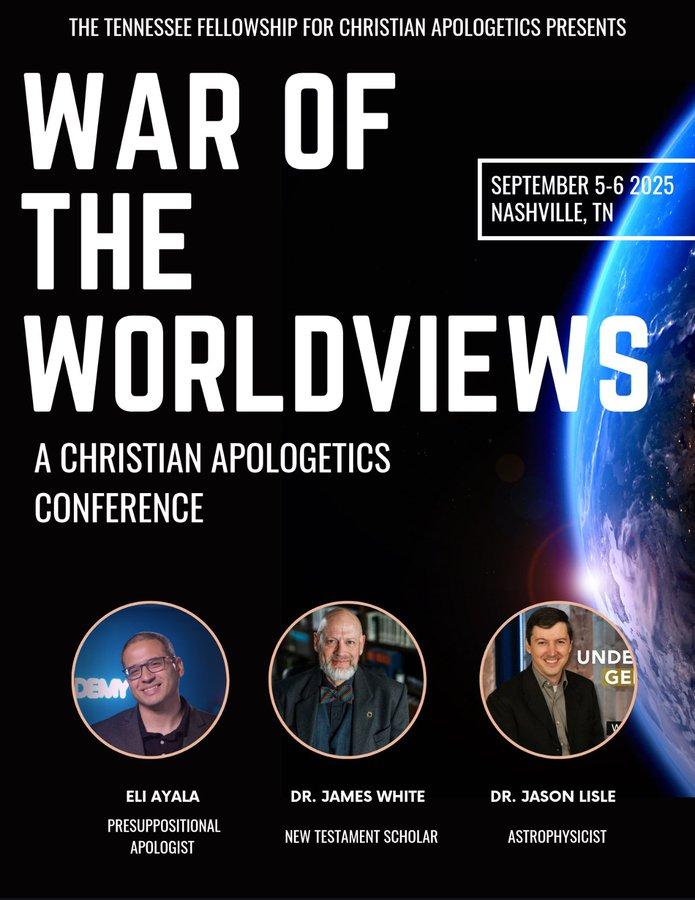
WAR OF THE WORLDVIEWS CONFERENCE
The Alpha & Omega Ministries App is now available to download.


The Dividing Line
The Dividing Line will be LIVE at 6:00pm EDT
Click the image below for our Youtube channel
Do Christians and Muslims Worship the Same God? EO and the Spirit
Looked at two video clips today, one from Joe Heschmeyer on the question “do Christians and Muslims worship a different God?” (we come to different conclusions) and the other from an EO priest relating a discussion he had with Joel Webbon about cessationism.
Why Is Your Soul Distressed? Then, A Bit More with Calvin
Decided I needed a break from the battle so as to remember the foundational stuff—we can get back to the rest next week, Lord willing. Looked at a few Psalms and just considered what is eternal and important–and will be important next week, next month, and 100 years from...
Frank Turek on Predestination, a Roman Critique of EOism as “Petrified,” and Andrew Isker on Supporting the Murder of Fritz Erbe (and others)
Played a clip where Dr. Turek uses a form of Molinism to respond to a question on predestination. Before or after that (funny how it is hard to remember right after doing the show!) we looked at a graphic where a Roman Catholic says the Orthodox are “Petrified” as...
The Great Divorce, Provisionism and the God-fearers, NT Wright on Abortion
Lots of different topics covered today, starting with the uproar between Trump and Musk but moving on to wider topics. Then we looked at some comments from Leighton Flowers about “God-fearers,” and finished up with a brief discussion about NT Wright’s defense of abortion in “extreme circumstances.”
Overseers and the Flock in the Digital Age, then, Calvin on the Knowledge of God and Man
Did a little more than the first half of the program on Acts 20 and Paul’s words to the Ephesian elders asking if it is really so shocking that elders today need to be concerned about what is coming into the fellowship through social media sources. Then, we started...
Matthew 23:37, You Are Not My Sheep, Sacralism Illustrated
Started off with a few observations about the fact that the US had a shadow, unelected government for four years, and how that should sober anyone up real fast, then we moved into some discussions with the Provisionists about Matthew 23:37 and about Jesus’ statement that “you are not...
Diving into Church History on the Papacy (and Some Other Stuff)
Did an hour today prior to joining Eli Ayala to discuss sola scriptura and dove into some church history, the bishop of Rome, the development hypothesis, and other stuff; likewise, briefly looked at the assertion that “sacralism saved the church,” another astonishing claim as well.
Dividing Line/Apologia Radio MashUp Reviewing the Mahler Debate and Related Topics/Issues
Joined Luke and Zach from Apologia Radio for a “mashup” show today to go over the Mahler debate and related issues. We ended up talking about the future, the state of the church, and a lot more! Love chatting with my brothers, and hope you enjoy the result!
About That Venomous Platypus, Pope Leo XIV and the “Rock,” Update on the Mobile Command Center
Had a lot to report on regarding Thursday’s debate, and talked a bit about Mahler’s abuse of Genesis 9:25-27 as well. Discussed some of the nasty anons like DefiantBaptist and their amazing behavior. Eventually moved to “Catholic Integralism” and Pope Leo XIV, and finished up with some information about...
Debate: James White vs Corey Mahler – Black Sanctification, “Can the Holy Spirit sanctify a Black Christian as much as a White Christian?” sponsored by Bibledingers on line, 5/15/25
Trinity and Transgenderism, The Classical Ponderer, and My Thoughts on the G3 Situation
Covered a few bookmarks in X I had saved, including an Episcopalian “priestess” who is confused on the Trinity and transgenderism, then an X account called The Classical Ponderer who ripped into me as a coward and a vulture. Then finished with some thoughts on yesterday’s announcement of the...
Condolences, Leo XIV, Debating Wolfe, Webbon on Excommunications
Started off offering Christian condolences to @SavagelyAverage and @KenFiveSolas on social media, both of whom lost their wives suddenly. Talked a bit about grieving. Then moved on to the new Pope, Leo XIV, and about how an earlier Leo, the Xth, was important in the Reformation. Then we looked...
Faith, the Qur’an, and the Bible, Online Defense of White Supremacists
A clip from Leighton Flowers comparing the Bible and the Qur’an (from four years ago!) popped up and that resulted in a tweet from LF about debating the topic. We examined that, then talked for a while about the exposure of “Woe” from the Stone Choir and amazingly how...
HB25-1312 in Colorado, Debating Wolfe, Purgatory, Marian Dogmas
Played J. Chase Davis’ testimony before the Colorado State Senate on the program today regarding the tyrannical and ethically insane HB25-1312 legislation pending up there. May God protect Colorado from this evil! Then I talked about everyone saying I am supposed to be debating Stephen Wolfe, and what we...
The Coming Conclave, then How Cults Get Members (Upcoming Debate)
Talked about the upcoming Papal conclave (5/7) and the legacy of Francis’s papacy in regards to Rome’s claims of ultimate authority. Then we moved into a discussion of the upcoming debate with Corey Mahler on May 15th, “Is the Holy Spirit Able to Sanctify Black Believers as Well as...
ReformCon Road Trip DL: Colorado Insanity, Why You Should Not Join the Roman Catholic Church
ReformCon starts tomorrow afternoon, so I am in Tucson and we did the program from the Mobile Command Center once again. Talked about the coming demographic disaster and its relationship to worldview issues, then discussed the utter evil of the leftists in Colorado pushing to destroy the family and...
The Death of Pope Francis, and the Provisionist Gospel
Started off talking about the passing of Pope Francis, but then connected the topic to the Provisionist denial of the need of the supernatural work of the Spirit of God to bring about spiritual life, showing that in reality, Provisionism has a less biblical anthropology than Rome does.
Trip Report and Debate Review
On my way home (get home Thursday), currently in Texas, and did a Road Trip DL reporting on the trip, and the encouragement of fine pastors and servants of Christ. Then we did a review of the two debates, commenting on key issues.
Road Trip: Deluded for Refusing to Love the Truth, Fillmore Baptist Church, Haughton, Louisiana, 4/13/25
Road Trip: Answering Antisemitism with Gospel Truth, Fillmore Baptist Church, Haughton, Louisiana, 04/12/25
Road Trip Debate: Romans 9, Dr. James White vs AK Richardson, The Parish of the Redeemer, Calhoun, Louisiana, 4/10/25
Road Trip: Ask Anything with Dr. James White Part 2, The Parish of the Redeemer, Calhoun, Louisiana, 4/9/25
Road Trip: Ask Anything with Dr. James White Part 1, The Parish of the Redeemer, Calhoun, Louisiana, 4/09/25
Road Trip Dividing Line: Responding to Alex O’Connor
Talked a bit about the current trip, but mainly focused upon comments made by Alex O’Connor on a webcast regarding the gospel of John and in particular comments he made about John 12:44 and John 1:1. Hope folks will be helped by the study!
Road Trip Debate: Is the King James Version the Best English Translation of the Bible? Dr. James White vs Dr. Doug Levesque, First Baptist Church, Livingston, Louisiana, 04/04/25
Road Trip : The Dual Nature of Christ: Fully God, Fully Man, First Baptist Church of Milton, Lafayette, Louisiana, 04/04/25
Road Trip Dividing Line: Jeff Durbin and the Jewish Representative, then Jay Dyer on Abraham
Rich worked hard to work on the audio challenges we have had in the past and the changes made it a lot easier for me to play video clips on the program today. So, we looked at Jeff Durbin’s exchange with the Jewish representative in Georgia, and responded to...
Story Time with Uncle Jimmy: The Acts of Paul and Thecla
As promised on today’s program I read through The Acts of Paul and Thecla, commented on the Orthodox veneration of Thecla as a saint and “equal of the Apostles,” and what we can learn about the context of the origination of this apocryphal mythology from the second century. By...
I Told You the Sacralists Were Coming, Didn’t I?
So Joel Webbon dropped a webcast about how the State is to correct the Church, and how this has been normative throughout church history. Well, do forgive me, but I’ve always opposed sacralism, still do, always will, and the errors and holes in the presentation, historically and logically, were...
A Nation Divided, My Irrelevancy, the Finished Atonement
Started off with more evidence of how divided a nation the US is, then moved on to listen to some brief comments from He Who Judges from Afar, and then we moved into some thoughts about the debate with Joe Heschmeyer, specifically on what his point was in emphasizing...
A Divided Nation Then Thoughts on Ecumenical Councils
Reflected on the deep division that exists in Western Culture today and in the United States in particular, and then moved on to some of the Jay Dyer stuff and the continued need to have an in-depth discussion on the “7th Ecumenical Council,” aka Nicea II.
Jay Dyer Implodes on the Playground; Yes, Joe, Bishop and Elder are the Same Office
About halfway through the program we had a power spike due to a storm blowing into Phoenix, but we got it all recorded anyway. First I dealt with the amazing explosion of infantile behavior by one Jay Dyer when I dared actually treat him like an adult in challenging...
All About Ignatius with Timothy Easley
Spent ninety minutes talking Ignatius, recensions, manuscripts, etc. with Timothy Easley today! Definitely a program for church history geeks! Hope all two dozen of you enjoy it!
Back from Arkansas, Heading to Louisiana, Two Debates in April, Debate Comments
Excited to be home, but excited to head out in just a matter of weeks for the “Louisiana Loop” that will take me to southern Louisiana for a debate on April 4th, and then to northern Louisiana for a debate on the 10th. Talked a bit about last weekend’s...
Listen on the Go
Theology Matters
Run From Andrew Tate
I confess, this entire issue leaves me astonished. Sure, it is part of judgment, yes, our hands are covered with blood, so yes, the Lord is just to turn us upon ourselves. I get all of that. “We need examples of masculinity” is all I hear. Look, the family,...
The Sin of Worry
Anxiety. Worry. I will confess, it is a besetting sin. I am not sure why. Maybe I picked it up from my parents, not because they expressed it to me, but because I was astute enough to recognize how difficult their lives were. How little we had, and how...
The Gracious Lens of Romans 1
One of the strongest arguments I know for the inspiration of Scripture is Romans 1. Why? Because all of mankind in all of his many centuries of writing about himself has never come close to the depth and accuracy of Paul’s diagnosis of man, the creature, in rebellion against...
On Presidential Immunity and the SCOTUS
Rational people had come to the same conclusion SCOTUS did on the topic of Presidential immunity for, well, as long as the republic has existed. You cannot have a functioning Presidency if the President can be imprisoned after his term for doing what he had to do as President....
1946 Movie Producers Doing a Road Trip
So I just got an email from the promoters of the 1946 Movie—the film that has face-planted, badly, since its “release” months ago. For some reason, its producers have kept it next to impossible to actually see, and, having seen it myself, I know why (it’s horrible). They are...
On the “Socinian Method”
Well, I guess there has been some progress. At least now I know that yes, brother Briggs was making reference to me, hence, I am a dangerous man to be warned about globally, evidently. I doubt I will get much in the way of serious response about the allegation...
On the Decree and the Actions of God’s Elect
You can tell when certain folks have just completely run out of meaningful commentary and argumentation, or, never possessed any to begin with. When people argue that someone who accepts the biblical teaching of God’s sovereign decree, election, the perfection of the atonement, etc., should, as a result, not...
About that 70 Million Number on Twitter
Well, I should probably just get on my bike and let this whole thing blow over, but, I really can’t. There are some important points that, as is normally the case, are being lost in the fog of battle. Maybe someday someone will go, “Hey, there were some folks...
The Gospel At War Conference Schedule
The More Things Change…
the more they stay the same. That’s the old adage. And in a sense, it is quite true. Recently the topic of Roman Catholicism has been front and center on Twitter. Taylor Marshall, a convert to Roman Catholicism (of some sort, anyway, though surely not the same sort as...
Witnessing Resources
The Mormon Law of Eternal Progression
I spoke on the topic of the “eternal law of progression” in Mormonism in Anchorage this morning. Here is the video.
The 1914 Chronology of Jehovah’s Witnesses
A. Establishing an Ancient Date 1. Fixed Dates 2. King List 3. Cuneiform Tablets 4. Correlation B. Astronomical Data 1. VAT 4956 – astronomical observations made during Nebuchadnezzar’ s 37th regnal year – 568/67 B. C. Hence, his first regnal year was spring 604 B. C., or, using Babylonian...
A Test for the Aaronic Priest
Are you an Aaronic priest? Possibly you are a Latter- day Saint who believes the priesthood was restored by Joseph Smith in 1829 and that you have been ordained as an Aaronic priest. Possibly you believe that Hebrews 5:4 applies to you: “And no man taketh this honor unto...
Latest Debates
Does God Forgive the Unrepentant? – The Dubious Textual Variant, ‘Father, forgive them, for they do not know what they are doing’
A few years back I posted an article explaining the weak textual evidence of Luke 23:34a, “Father, forgive them, for they do not know what they are doing.” This week is Good Friday and many sermons will be using this verse, so I think it is appropriate to bring...
Confucianism, Islam, and Christianity – One Point of Contrast
Qin Shi Huang (260 – 210 BC) is the most prominent of the Chinese emperors. He united China through conquest, began the Great Wall of China, and had the Terra Cotta warriors built. He’s significant to Confucianism – and especially the textual transmission of Confucius’ works – because toward...
Chris Pinto vs. James White – Debate Summarized
The Chris Pinto vs. James White debate on whether Codex Sinaiticus is a modern forgery can be boiled down to a few considerations. 1) Constantine Simonides claimed that he wrote the document based on collating pre-existing manuscripts, and that his uncle corrected the document. Both sides agree that he...
Sola Scriptura
Road Trip: Sola Scriptura – Session 5, Covenant of Grace Reformed Church, St Charles, Missouri, 12/3/23
Road Trip: Sola Scriptura – Session 4 of 4, Covenant of Grace Reformed Church, St Charles, Missouri, 12/2/23
Road Trip: Sola Scriptura – Session 3 of 4, Covenant of Grace Reformed Church, St Charles, Missouri, 12/2/23
Christian Worldview
Why Is Your Soul Distressed? Then, A Bit More with Calvin
Decided I needed a break from the battle so as to remember the foundational stuff—we can get back to the rest next week, Lord willing. Looked at a few Psalms and just considered what is eternal and important–and will be important next week, next month, and 100 years from...
The Great Divorce, Provisionism and the God-fearers, NT Wright on Abortion
Lots of different topics covered today, starting with the uproar between Trump and Musk but moving on to wider topics. Then we looked at some comments from Leighton Flowers about “God-fearers,” and finished up with a brief discussion about NT Wright’s defense of abortion in “extreme circumstances.”
Overseers and the Flock in the Digital Age, then, Calvin on the Knowledge of God and Man
Did a little more than the first half of the program on Acts 20 and Paul’s words to the Ephesian elders asking if it is really so shocking that elders today need to be concerned about what is coming into the fellowship through social media sources. Then, we started...
Roman Catholicism
Purgatory: 1 Corinthians 3 and Tim Staples
Don’t hold your breath for the invitation for me to be on Catholic Answers Live to discuss, oh, “Does John 6 Teach the Roman Catholic Doctrine of the Eucharist,” (I’d do it in a heartbeat), but today we had Tim Staples on the program for 90 minutes to debate...
Art Sippo on 1 Corinthians 3 and Purgatory
I noted today another fascinating post from Art Sippo, the Catholic lay apologist (and writer of odd pulp fiction stories). Algo had posted a few quotes that demonstrate, as all rational historians recognize, that dogmas like purgatory developed over time, and hence, are not apostolic in origin. Sippo’s response...
1993 Sola Scriptura Debate Review Begins
We began listening to the 1993 San Diego debate on sola scriptura with Roman Catholic apologist Patrick Madrid today. We will continue this review over the course of the next few programs, with the exception of this Thursday when we will be examining the textual variant at Luke 23:34...
The Papacy
Open Phones Dividing Line Friday
Let’s see what some of the topics were: Sam Gipp and “Antioch manuscripts,” the Church & Culture, Debating the Papacy, Justification and Roman Catholic apologists, how to talk to Christians who have bought into social justice theories, and more!
Called to Cyprian – Responding to Anders’ Historical Error
On Catholic Answers, episode #6796, Dr. David Anders makes it sound as though the issue of supremacy of the Roman bishop came up for the first time in the third century, as though “Pope Stephen” asserted the primacy of the Roman see, and as though the East acquiesced in...
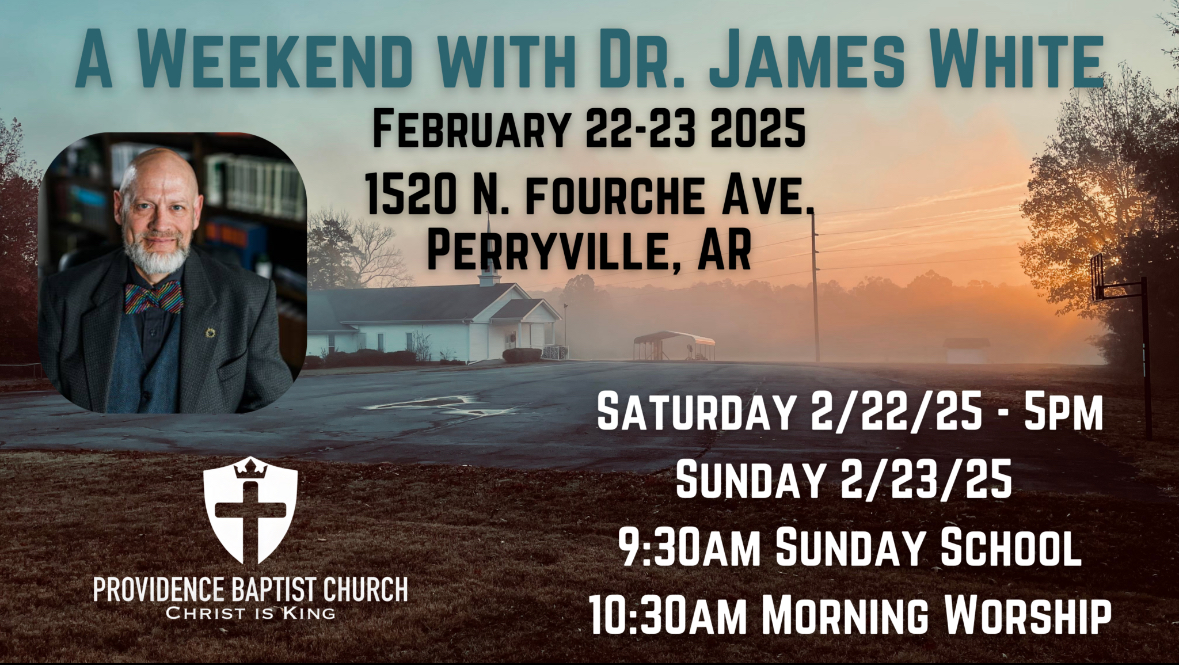
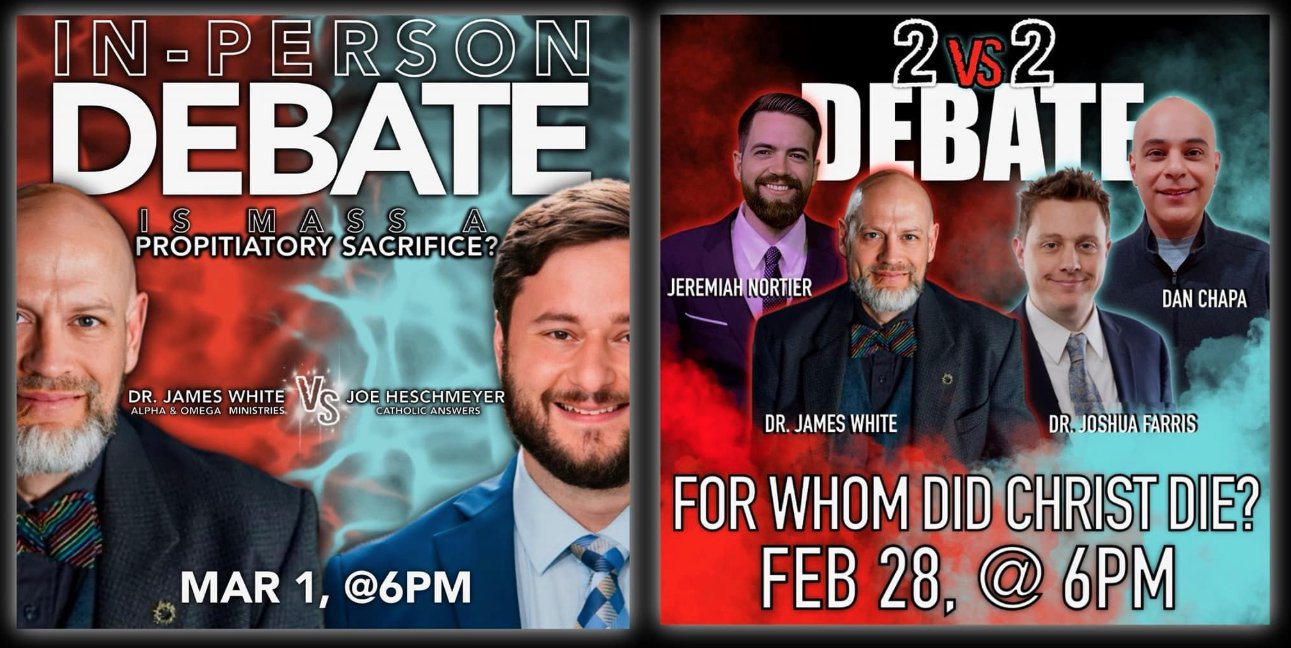
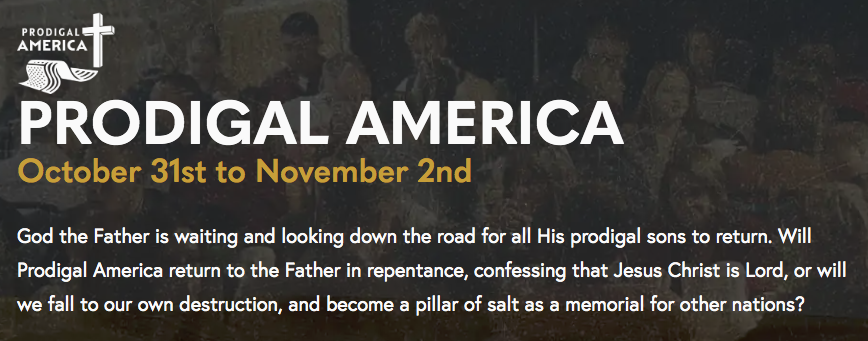
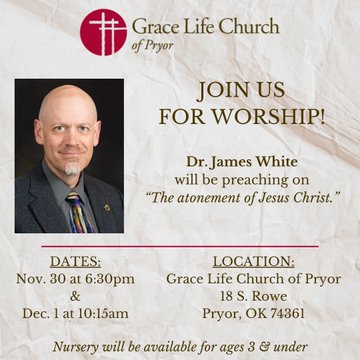
DEBATE UPDATE
The Alpha & Omega Ministries App is now available to download.
Events
June 2025 |
||||||
|---|---|---|---|---|---|---|
| Sun | Mon | Tue | Wed | Thu | Fri | Sat |
|
1
|
2
|
3
|
4
|
5
|
6
|
7
|
|
8
|
9
|
10
|
11
|
12
|
13
|
14
|
|
15
|
16
|
17
|
18
|
19
|
20
|
21
|
|
22
|
23
|
24
|
25
|
26
|
27
|
28
|
|
29
|
30
|
|||||
The Dividing Line
The Dividing Line will be LIVE at 6:00pm EDT
Click the image below for our Youtube channel
Do Christians and Muslims Worship the Same God? EO and the Spirit
Looked at two video clips today, one from Joe Heschmeyer on the question “do Christians and Muslims worship a different God?” (we come to different conclusions) and the other from an EO priest relating a discussion he had with Joel Webbon about cessationism.
Why Is Your Soul Distressed? Then, A Bit More with Calvin
Decided I needed a break from the battle so as to remember the foundational stuff—we can get back to the rest next week, Lord willing. Looked at a few Psalms and just considered what is eternal and important–and will be important next week, next month, and 100 years from...
Frank Turek on Predestination, a Roman Critique of EOism as “Petrified,” and Andrew Isker on Supporting the Murder of Fritz Erbe (and others)
Played a clip where Dr. Turek uses a form of Molinism to respond to a question on predestination. Before or after that (funny how it is hard to remember right after doing the show!) we looked at a graphic where a Roman Catholic says the Orthodox are “Petrified” as...
The Great Divorce, Provisionism and the God-fearers, NT Wright on Abortion
Lots of different topics covered today, starting with the uproar between Trump and Musk but moving on to wider topics. Then we looked at some comments from Leighton Flowers about “God-fearers,” and finished up with a brief discussion about NT Wright’s defense of abortion in “extreme circumstances.”
Overseers and the Flock in the Digital Age, then, Calvin on the Knowledge of God and Man
Did a little more than the first half of the program on Acts 20 and Paul’s words to the Ephesian elders asking if it is really so shocking that elders today need to be concerned about what is coming into the fellowship through social media sources. Then, we started...
Theology Matters
Run From Andrew Tate
I confess, this entire issue leaves me astonished. Sure, it is part of judgment, yes, our hands are covered with blood, so yes, the Lord is just to turn us upon ourselves. I get all of that. “We need examples of masculinity” is all I hear. Look, the family,...
The Sin of Worry
Anxiety. Worry. I will confess, it is a besetting sin. I am not sure why. Maybe I picked it up from my parents, not because they expressed it to me, but because I was astute enough to recognize how difficult their lives were. How little we had, and how...
The Gracious Lens of Romans 1
One of the strongest arguments I know for the inspiration of Scripture is Romans 1. Why? Because all of mankind in all of his many centuries of writing about himself has never come close to the depth and accuracy of Paul’s diagnosis of man, the creature, in rebellion against...
On Presidential Immunity and the SCOTUS
Rational people had come to the same conclusion SCOTUS did on the topic of Presidential immunity for, well, as long as the republic has existed. You cannot have a functioning Presidency if the President can be imprisoned after his term for doing what he had to do as President....
1946 Movie Producers Doing a Road Trip
So I just got an email from the promoters of the 1946 Movie—the film that has face-planted, badly, since its “release” months ago. For some reason, its producers have kept it next to impossible to actually see, and, having seen it myself, I know why (it’s horrible). They are...
On the “Socinian Method”
Well, I guess there has been some progress. At least now I know that yes, brother Briggs was making reference to me, hence, I am a dangerous man to be warned about globally, evidently. I doubt I will get much in the way of serious response about the allegation...
On the Decree and the Actions of God’s Elect
You can tell when certain folks have just completely run out of meaningful commentary and argumentation, or, never possessed any to begin with. When people argue that someone who accepts the biblical teaching of God’s sovereign decree, election, the perfection of the atonement, etc., should, as a result, not...
About that 70 Million Number on Twitter
Well, I should probably just get on my bike and let this whole thing blow over, but, I really can’t. There are some important points that, as is normally the case, are being lost in the fog of battle. Maybe someday someone will go, “Hey, there were some folks...
The Gospel At War Conference Schedule
The More Things Change…
the more they stay the same. That’s the old adage. And in a sense, it is quite true. Recently the topic of Roman Catholicism has been front and center on Twitter. Taylor Marshall, a convert to Roman Catholicism (of some sort, anyway, though surely not the same sort as...
Witnessing Resources
The Mormon Law of Eternal Progression
I spoke on the topic of the “eternal law of progression” in Mormonism in Anchorage this morning. Here is the video.
The 1914 Chronology of Jehovah’s Witnesses
A. Establishing an Ancient Date 1. Fixed Dates 2. King List 3. Cuneiform Tablets 4. Correlation B. Astronomical Data 1. VAT 4956 – astronomical observations made during Nebuchadnezzar’ s 37th regnal year – 568/67 B. C. Hence, his first regnal year was spring 604 B. C., or, using Babylonian...
A Test for the Aaronic Priest
Are you an Aaronic priest? Possibly you are a Latter- day Saint who believes the priesthood was restored by Joseph Smith in 1829 and that you have been ordained as an Aaronic priest. Possibly you believe that Hebrews 5:4 applies to you: “And no man taketh this honor unto...
Latest Debates
Does God Forgive the Unrepentant? – The Dubious Textual Variant, ‘Father, forgive them, for they do not know what they are doing’
A few years back I posted an article explaining the weak textual evidence of Luke 23:34a, “Father, forgive them, for they do not know what they are doing.” This week is Good Friday and many sermons will be using this verse, so I think it is appropriate to bring...
Confucianism, Islam, and Christianity – One Point of Contrast
Qin Shi Huang (260 – 210 BC) is the most prominent of the Chinese emperors. He united China through conquest, began the Great Wall of China, and had the Terra Cotta warriors built. He’s significant to Confucianism – and especially the textual transmission of Confucius’ works – because toward...
Chris Pinto vs. James White – Debate Summarized
The Chris Pinto vs. James White debate on whether Codex Sinaiticus is a modern forgery can be boiled down to a few considerations. 1) Constantine Simonides claimed that he wrote the document based on collating pre-existing manuscripts, and that his uncle corrected the document. Both sides agree that he...
Sola Scriptura
Road Trip: Sola Scriptura – Session 5, Covenant of Grace Reformed Church, St Charles, Missouri, 12/3/23
Road Trip: Sola Scriptura – Session 4 of 4, Covenant of Grace Reformed Church, St Charles, Missouri, 12/2/23
Road Trip: Sola Scriptura – Session 3 of 4, Covenant of Grace Reformed Church, St Charles, Missouri, 12/2/23
Christian Worldview
Why Is Your Soul Distressed? Then, A Bit More with Calvin
Decided I needed a break from the battle so as to remember the foundational stuff—we can get back to the rest next week, Lord willing. Looked at a few Psalms and just considered what is eternal and important–and will be important next week, next month, and 100 years from...
The Great Divorce, Provisionism and the God-fearers, NT Wright on Abortion
Lots of different topics covered today, starting with the uproar between Trump and Musk but moving on to wider topics. Then we looked at some comments from Leighton Flowers about “God-fearers,” and finished up with a brief discussion about NT Wright’s defense of abortion in “extreme circumstances.”
Overseers and the Flock in the Digital Age, then, Calvin on the Knowledge of God and Man
Did a little more than the first half of the program on Acts 20 and Paul’s words to the Ephesian elders asking if it is really so shocking that elders today need to be concerned about what is coming into the fellowship through social media sources. Then, we started...
Roman Catholicism
Purgatory: 1 Corinthians 3 and Tim Staples
Don’t hold your breath for the invitation for me to be on Catholic Answers Live to discuss, oh, “Does John 6 Teach the Roman Catholic Doctrine of the Eucharist,” (I’d do it in a heartbeat), but today we had Tim Staples on the program for 90 minutes to debate...
Art Sippo on 1 Corinthians 3 and Purgatory
I noted today another fascinating post from Art Sippo, the Catholic lay apologist (and writer of odd pulp fiction stories). Algo had posted a few quotes that demonstrate, as all rational historians recognize, that dogmas like purgatory developed over time, and hence, are not apostolic in origin. Sippo’s response...
1993 Sola Scriptura Debate Review Begins
We began listening to the 1993 San Diego debate on sola scriptura with Roman Catholic apologist Patrick Madrid today. We will continue this review over the course of the next few programs, with the exception of this Thursday when we will be examining the textual variant at Luke 23:34...
The Papacy
Open Phones Dividing Line Friday
Let’s see what some of the topics were: Sam Gipp and “Antioch manuscripts,” the Church & Culture, Debating the Papacy, Justification and Roman Catholic apologists, how to talk to Christians who have bought into social justice theories, and more!
Called to Cyprian – Responding to Anders’ Historical Error
On Catholic Answers, episode #6796, Dr. David Anders makes it sound as though the issue of supremacy of the Roman bishop came up for the first time in the third century, as though “Pope Stephen” asserted the primacy of the Roman see, and as though the East acquiesced in...
Listen on the Go
The Marian Dogmas
Tim Staples and the Marian Dogmas
After some brief comments about some of the insanity in the world at the start, focused the rest of the hour upon the comments made by Tim Staples on yesterday’s Catholic Answers Live program where he talked about Mary and her role as co-redemptrix. Important stuff during this 500th anniversary of...
A Biblical Basis for the “Immaculate Conception”?
Catholic Answers has some interesting ways of grabbing your attention. By placing the beginning paragraph or two of the lead article of their monthly magazine, This Rock, on the very cover of the work, they draw your attention into reading the rest of the article. True to form, the...
The Audio for the Marian Dogmas Debate has been Posted
Recorded on May 15, 2017 in London: Do the Catholic Church’s Teachings on Mary Constitute Authentic Christian Doctrine? James White debates Peter D. Williams at the London Oratory in St. Wilfrid’s Hall.
Ahmed Deedat
Refuting the Shallow Arguments of Zakir Naik
As most of you know, Zakir Naik is a wildly popular Islamic speaker in the mode of Ahmed Deedat. Unfortunately, Naik knows better than to debate those who can demonstrate his errors. Which is why he remains so popular, it seems! But he cannot hide his many falsehoods. David...
Zakir Naik Illustrates the Dual Face of Islam When in the Public Square
Very interesting contrast from Zakir Naik’s own mouth (again illustrating why Naik refuses to debate those who could expose his arguments).
Zakir Naik’s Claims on Muhammad in the Bible
Here is my third and final response to Zakir Naik’s appearance on The Deen Show. What I did was take my opening statement from my debate with Shabir Ally on this topic from London in November of last year, along with my comments on Deuteronomy 18:18 from the preceding...
Shabir Ally
Debate: Tawhid or Trinity: Is God One or Three Divine Persons? with Shabir Ally at Georgia Tech, Atlanta, Georgia 11/13/2019
On November 13, 2019, James White debated Shabir Ally at Georgia Tech in Atlanta, GA on the topic Tawhid or Trinity: Is God One or Three Divine Persons?
Response to Dr. Shabir Ally, Part IV (Conclusion)
I hurry to finish my response to the article published by Dr. Shabir Ally shortly after our debate at the University of Pretoria in South Africa in early October. This is the fourth, and thankfully, final portion of my response. Dr. Ally continued: James was clearly in a bind....
Debate: Did the Earliest Followers of Jesus Believe in His Deity? Shabir Ally at University of Pretoria, South Africa 10/8/2013
Islam
Do Christians and Muslims Worship the Same God? EO and the Spirit
Looked at two video clips today, one from Joe Heschmeyer on the question “do Christians and Muslims worship a different God?” (we come to different conclusions) and the other from an EO priest relating a discussion he had with Joel Webbon about cessationism.
Mockery is not a Christian Virtue, then, the Carson/Huff Discussion
Last Road Trip DL for 2024 coming from Holbrook, Arizona this evening. Started off looking at Joel Webbon’s defense both of “anons” and using them to mock people “right off X,” naming Owen Strachan as an example. Then we discussed the encounter between Wes Huff, a Christian scholar and...
Mishnah, Talmud, and the Ugly Rise of Side-B Nazism in 2024
Didn’t pull any punches today, folks. When the Nazis come after you it is time to shoot straight in return. Took on some nasty players today, but had to provide background information on, for example, the origination of the Mishnah, Gemara, and Talmud, etc. Hopefully useful to everyone, and...
King James Onlyism
Trip Report and Debate Review
On my way home (get home Thursday), currently in Texas, and did a Road Trip DL reporting on the trip, and the encouragement of fine pastors and servants of Christ. Then we did a review of the two debates, commenting on key issues.
Road Trip DL from Jonesboro
Mainly covered the upcoming debates, how to properly encourage someone interested in pursuing apologetics, foundational issues, etc., and then talked a bit about Gavin Ortlund and his videos, and the recent discussion about the canon of Scripture, the Deuterocanonical books, etc. Not sure about when we will be able...
Road Trip #3: The Sad Situation with Steven Anderson, then, Ammon Hillman Reveals His True Intentions
After a few minutes of the inevitable talk about being on the road, going through a McDonald’s drive-thru looking for Donald Trump, and the current election situation, I commented on the Steven Anderson saga, and then spent the rest of the program talking about the claims Ammon Hillman made...
Bible Transmission
Confucianism, Islam, and Christianity – One Point of Contrast
Qin Shi Huang (260 – 210 BC) is the most prominent of the Chinese emperors. He united China through conquest, began the Great Wall of China, and had the Terra Cotta warriors built. He’s significant to Confucianism – and especially the textual transmission of Confucius’ works – because toward...
Atheism
Why Is Your Soul Distressed? Then, A Bit More with Calvin
Decided I needed a break from the battle so as to remember the foundational stuff—we can get back to the rest next week, Lord willing. Looked at a few Psalms and just considered what is eternal and important–and will be important next week, next month, and 100 years from...
Mockery is not a Christian Virtue, then, the Carson/Huff Discussion
Last Road Trip DL for 2024 coming from Holbrook, Arizona this evening. Started off looking at Joel Webbon’s defense both of “anons” and using them to mock people “right off X,” naming Owen Strachan as an example. Then we discussed the encounter between Wes Huff, a Christian scholar and...
Road Trip #3: The Sad Situation with Steven Anderson, then, Ammon Hillman Reveals His True Intentions
After a few minutes of the inevitable talk about being on the road, going through a McDonald’s drive-thru looking for Donald Trump, and the current election situation, I commented on the Steven Anderson saga, and then spent the rest of the program talking about the claims Ammon Hillman made...